
ARTISTS
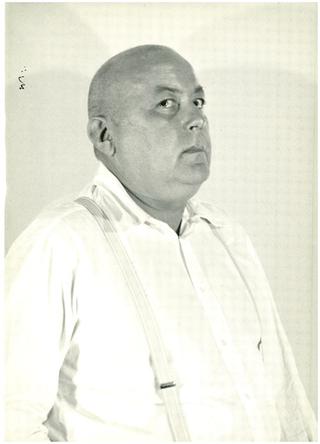
Dieter Roth (German/Swiss, 1930–1998) was an important artist of the second half of the 20th century, best known for his books, sculptures, installations, and use of food. Born in Hanover, Roth split his early childhood years between Switzerland and Germany, before settling in Berlin in 1947. He moved to Iceland in 1957, isolating himself physically and psychologically from the artistic centers in Europe and New York. Some of his earliest work incorporated rearranged, found texts into books and new forms, including Literaturwurst (1961), a sausage casing stuffed with spices, recipes, and newspaper cuttings. He contributed to An Anecdoted Topography of Chance (1962), an artist’s book of anecdotes, associations, and memories relating to everyday objects, compiled by his friend Daniel Spoerri (Swiss, b. 1930). Although technically predating the Fluxus movement, this book anticipated many of the philosophical notions that would underpin the nascent artistic movement and influence Roth’s oeuvre.
Blurring the line between process and product, Roth embraced accident, mutation, and mutability in his work. Famous for his use of biodegradable materials, his first exhibition in the United States, Staple Cheese: A Race (1970), displayed pictures made of cheese with measuring lines to track their progress as they slid down the gallery wall. At another series of shows, Roth created manufacturing instructions, allowing visitors to produce their own books, or baked goods. In his later career, Roth achieved widespread acclaim, representing Switzerland at the Venice Biennale in 1992, and was featured in a retrospective at the MoMA. He collaborated with his son, Björn Roth (German, b. 1961), on many of his later works. Roth died in 1998 in Basel, Switzerland.
RELATED PUBLICATIONS
RELATED EXHIBITIONS
READER
CATALOGUE
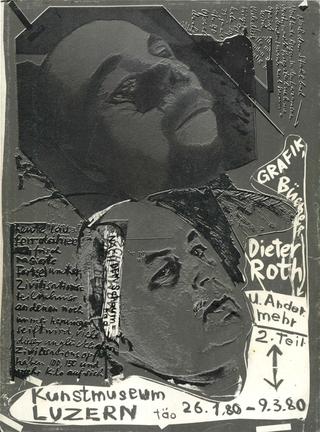
Dieter Roth: Bücher und Grafik (2. Teil) u.a.m. = Books and graphics (part 2) and other stuff. Aus den Jahren 1971-1979 (und Nachtrag zum 1. Teil) = from 1971 until 1979 (including supplement to part 1). Stuttgart: Hansjörg Mayer, Lucerne: Kunstmuseum Luzern, 1979.

CATALOGUE
D. R. [Dieter Roth]: Ein Lebenslauf von 50 Jahren. Beibuch zur Ausstellung "Dieter Roth, Graphik, Bücher u.a.m. 1971-79". Lucerne: Kunstmuseum Luzern, 1980.
CATALOGUE
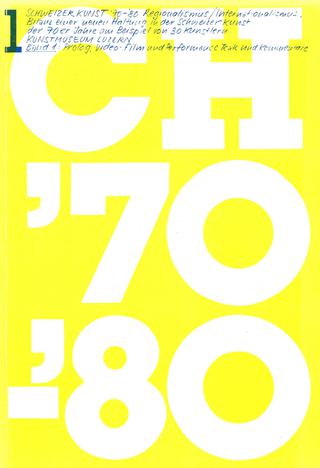
CH '70-'80. Schweizer Kunst '70-'80. Band 1. Regionalismus/Internationalismus. Bilanz einer neuen Haltung in der Schweizer Kunst der 70er Jahre am Beispiel von 30 Künstlern. Prolog. Video, Film und Performance. Texte und Kommentare. Lucerne: Kunstmuseum Luzern, 1981.
CATALOGUE
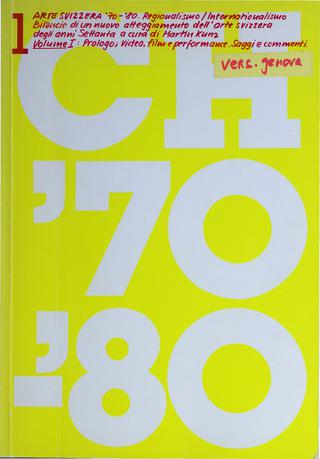
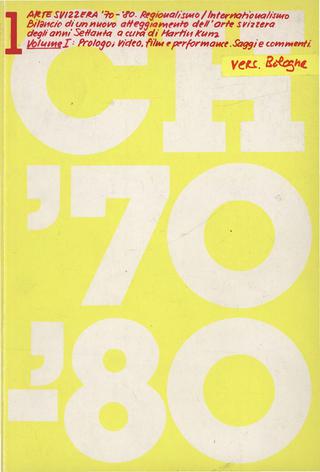
CH '70-'80. Arte Svizzera '70-'80. Volume 1. Regionalismo/Internazionalismo. Bilancio di un nuovo atteggiamento dell'arte svizzera degli anni Settanta. Prologo, video, film e performance. Saggi e commenti. Lucerne: Kunstmuseum Luzern, 1981.
CATALOGUE
CH '70-'80. Arte Svizzera '70-'80. Volume 1. Regionalismo/Internazionalismo. Bilancio di un nuovo atteggiamento dell'arte svizzera degli anni Settanta. Prologo, video, film e performance. Saggi e commenti. Lucerne: Kunstmuseum Luzern, 1981.
ARTICLE
Die eigentliche und die uneigentliche Schweizer Kunst. 1985.
ARTICLE
Schweizer Kunst der Gegenwart. Eine persönliche Bilanz der 70er und 80er Jahre. 1986.
Dieter Roth: Grafik, Bücher und weiteres mehr 1971-79 (Filme, Video, Schallplatten, Tonbänder). Kunstmuseum Luzern, Lucerne, Switzerland, 1980 (TRAVELED: Staatsgalerie Stuttgart, Stuttgart, 1979; Gemeentemuseum Den Haag, Den Haag, 1980).
from Jan. 27, 1980
to March 9, 1980
CH '70-'80. Schweizer Kunst '70-'80. Regionalismus/Internationalismus. Bilanz einer neuen Haltung in der Schweizer Kunst der 70er Jahre am Beispiel von 30 Künstlern = Arte Svizzera '70-'80. Regionalismo/internazionalismo. Bilancio di un nuovo atteggiamento dell'arte svizzera degli anni Settanta. Kunstmuseum Luzern, Lucerne, Switzerland, 1981 (TRAVELED: Galleria Comunale d'Arte Moderna, Bologna, 1981; Teatro del Falcone, Genova, 1981; Rheinisches Landesmuseum, Bonn, 1982; Neue Galerie am Landesmuseum Joanneum, Graz, 1982).
from Feb. 1, 1981
to March 29, 1981
CH '70-'80. Arte Svizzera '70-'80. Regionalismo/internazionalismo. Bilancio di un nuovo atteggiamento dell'arte svizzera degli anni Settanta. Galleria Comunale d'Arte Moderna, Bologna, Italy, 1981.
from June 27, 1981
to Aug. 31, 1981
CH '70-'80. Arte Svizzera '70-'80. Regionalismo/internazionalismo. Bilancio di un nuovo atteggiamento dell'arte svizzera degli anni Settanta. Teatro del Falcone, Genova, Italy, 1981.
from Oct. 15, 1981
to Nov. 15, 1981
CH '70-'80. Schweizer Kunst '70-'80. Regionalismus/Internationalismus. Bilanz einer neuen Haltung in der Schweizer Kunst der 70er Jahre am Beispiel von 30 Künstlern. Rheinisches Landesmuseum Bonn, Bonn, Germany, 1982.
from July 1, 1982
to Aug. 8, 1982
CH '70-'80. Schweizer Kunst '70-'80. Regionalismus/Internationalismus. Bilanz einer neuen Haltung in der Schweizer Kunst der 70er Jahre am Beispiel von 30 Künstlern. Neue Galerie am Landesmuseum Joanneum, Graz, Austria, 1982.
from Oct. 16, 1982
to Nov. 10, 1982
TODO